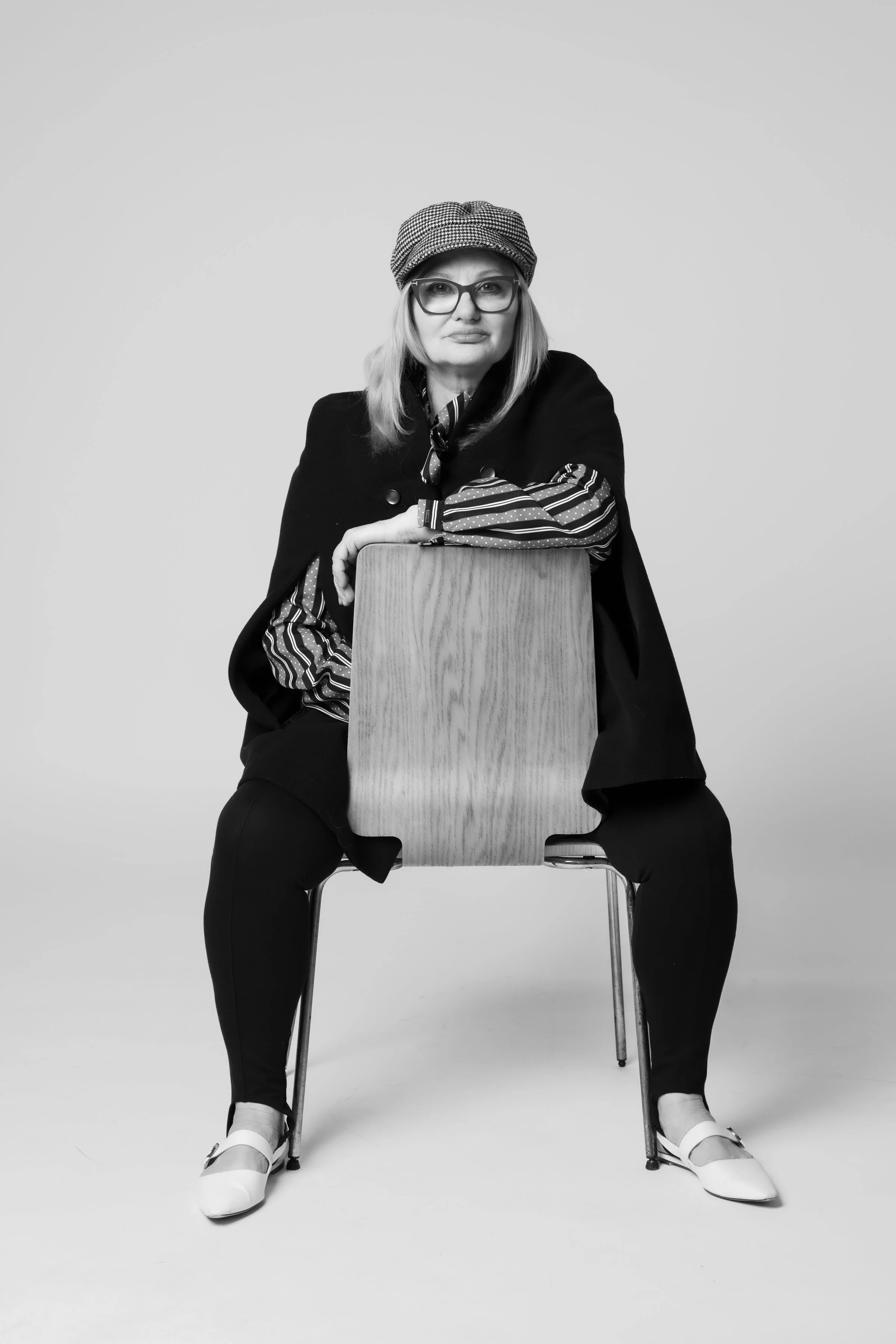
Kim Tonelli - Music Photographer, Commercial Photographer
Q: How did you get into photography? Why did you choose it?
A: I was 18 when I first got inspired. I saw a “painting with light” exercise in a pull-out camera magazine at high school and thought, What’s that? My teacher was offering it as an elective and encouraged me to give it a go. That night I went home, traced my naked body with a pen line, and accidentally created these Matisse-like shapes. I didn’t realise it then, but what I fell in love with was the art side of photography.
My teacher encouraged me to continue, and I ended up doing it for a whole year. I tried to get into Prahran College of the Arts but didn’t make it; I got into RMIT instead. The course was very commercial, which wasn’t really my passion, but there was one subject — Communication Arts — that I loved. I’ve always been drawn to portraiture and to people.
My brother was in a band, I loved the ’60s and the Beatles, and naturally I gravitated to photographing him and his band. That set everything in motion.
Q: When you moved to London, who were you assisting?
A: I worked at Skyline Monica’s studio in Marylebone Mews. The main photographer, Peter Smith, was the “knitwear king.” We’d fly to Spain, Majorca, Menorca, the Canary Islands to photograph knitwear patterns on flat-chested teenagers because every cable stitch had to show. It was surreal.
The studio itself was incredible — an old darkroom with a spiral staircase, a Cockney technician named Joe who hand-processed E6 and had permanently yellow fingers, and archives from the 1960s. I found prints of Roger Moore modelling knitwear, Joanna Lumley, and others. I’ll admit I kept some of them.
I lived on £100 a week, used the studio for free, lived cheaply, worked weekends at Camden Market, and shared a place with Bronwen Kidd. We built a darkroom and pushed each other to hustle, to pick up the phone, to go show our portfolios. Those were formative years.
Q: How did you break into music photography?
A: Total serendipity. While assisting, I photographed my brother’s drummer in beautiful natural light. A Motörhead roadie — “Freaky Scottish Guy” — saw the image and told me to go see Mick Mercer. I didn’t have the confidence for a year and a half.
When I finally went, he was starting Siren magazine. Perfect timing. Suddenly I was shooting goth bands — The Mission, Patricia Morrison — even though I was a ’60s girl at heart. But being trained in studio lighting gave my work polish, and magazines noticed.
My images became my calling card. The more I shot, the more I was hired. It all snowballed.
Q: Did you shoot for Rolling Stone? What was your first cover like?
A: Yes — Rolling Stone Australia. I did several covers for them. My first-ever cover, though, was in 1991 for a European music magazine. I was ecstatic.
Britpop opened everything up — Paul Weller, Oasis, Blur. I worked up the courage to approach Paul Weller’s father because I’d photographed a rare moment of Paul smiling on stage. They used the shot for a press ad, let me shoot more gigs, and work rolled in from there.
In those days I travelled with huge Bowens lights — dragging them off airport carousels — because I only knew studio lighting. I couldn’t shoot documentary to save myself. Only later did I learn natural-light storytelling through workshops and travel.
Q: Looking back, do you have any regrets or things you’d do differently?
A: I wish I’d had the courage to photograph certain heroes when opportunities came. A few of them offered sessions, but I was too scared. That’s probably the only regret.
Otherwise, I’m proud of sticking to my integrity. Money was always tight — especially in music photography — but my brother and I lived like artists. We took part-time jobs when needed, but we never compromised the work. The work always came first.
I’ve been shooting for 37 years. I started at 18 and have been in business since ’92. I’m slowing down now, focusing on personal projects. I still love branding photography — it’s fun — but music photography simply isn’t what it used to be.
No real regrets. Just gratitude.
If you'd like, I can also prepare a shorter bio, a long-form narrative version, or a caption set to accompany portraits from this session.