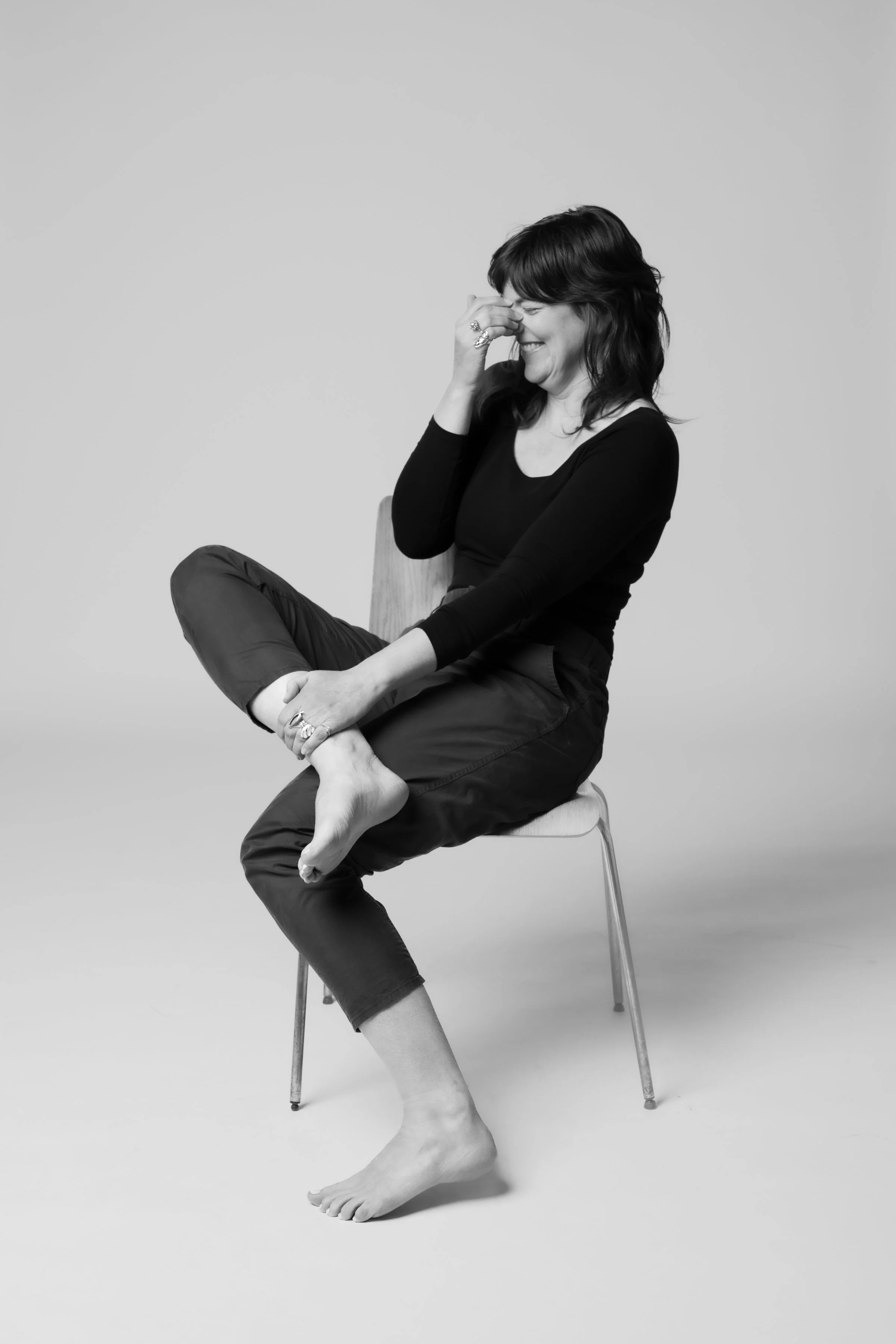
Harriet Tarbuck - Photographer, Educator, Podcaster
Q: Let’s start with photography. How did you get involved? What was your path into it?
A: I’ve pretty much always had a camera in my hand. I got my first camera when I was six, and all through high school I was the one with the camera at every party. But I didn’t take it seriously early on.
When I was living in the UK, a friend wanted to look at a screen-printing course at an art college in Leeds. I wandered into the photography department. We both applied. She didn’t get in—I did. I studied there for a couple of years, but still didn’t jump into photography professionally. I was working in hospitality the whole time.
When we came back to Australia in 2008, I told myself, “If you’re going to do this, it has to be now.” That’s when I pulled the bandaid off and began pursuing it professionally—but in truth, I’d been taking photos my whole life.
Q: Was photography initially a creative outlet rather than something you saw as a career?
A: Yes and no. I didn’t think of it as “art.” I wasn’t building personal projects or thinking conceptually. I was driven by memory—by wanting to remember things. I moved a lot growing up, and I think I was afraid of forgetting.
I loved connecting with people, loved creating images, but I didn’t label it as a creative practice. Over time, I realised documenting is still creative—you’re choosing the frame, the moment, the feeling.
Q: Something I’ve noticed in your podcasts and your work: you thrive on collaboration. I’m a lone wolf—collaboration seems to be your thing. Why is that?
A: I didn’t realise it for a long time, but yes—collaboration is central for me. I love working with people. I’m good at getting the best out of others, and I’m also good at hiding from the limelight. I prefer celebrating other people.
And honestly, if I had to do everything alone, a lot of things just wouldn’t happen. I’m lazy when it’s just about me! I’d rather be at home with my family. But when I collaborate, I feed off the energy of others—it keeps me committed.
Q: Do you have imposter syndrome?
A: Oh, absolutely. My whole photographic life has been full of imposter syndrome. But something shifted recently—turning 45, watching my husband turn 50—I suddenly thought, “I don’t want to care anymore.”
If someone doesn’t like my work, they can look at someone else’s. I’ve been doing this long enough. So yes, the imposter syndrome is there, but I’m actively challenging it, and the change is happening fast.
Q: I’d personally place you in the ‘arty’ camp rather than the technical/commercial camp. Would you?
A: You wouldn’t look at my personal work and think “technical”! I never saw myself as an artist. Photography was documenting life, capturing memories.
Photo Collective changed that. We celebrate the emotive, expressive, atmospheric. A blurry image that makes you feel something is more powerful to me than a technically perfect image without soul. Working with Sally sharpened that too—she suddenly called me “the arty one,” which I’d never seen in myself until then.
Q: The APA Awards feel more art-leaning than commercial. Is that your influence?
A: (Laughs) The imposter syndrome in me wants to deny it—but yes, partly. Tom and I built the APAs, and even though judges change each year, the foundations come from us.
In the early years we let technically excellent work through even if it didn’t move us emotionally. Over time we realised we didn’t have to appease everyone. We could lean into our aesthetic.
Now we choose finalists who either move us or deserve space for the judges to evaluate. So yes, an aesthetic has evolved—and it sits between the commercial and the artistic, but with a definite tilt toward the expressive.
Q: Tell me about teaching. Where did that come from?
A: PSC approached Tom and me in 2021 to teach their Business & Industry class. It surprised us, but I think they saw us experimenting and creating things in the industry.
We taught it together the first year. Tom moved on, and I realised how much I loved it. The students inspire me, and teaching pushes my own practice—because you can’t tell students to do something unless you’re also willing to do it.
I’d been mentoring and running workshops for years, but teaching at the tertiary level has been incredibly rewarding. Every year brings new ideas, new perspectives, new challenges.
Q: Looking back now, do you have any regrets or challenges you've struggled with?
A: Personally, yes. My 20s were fantastic—hedonistic, wild, messy, fun. I drank too much and partied too hard. I don’t regret the experiences, but I sometimes think if I’d slowed down, I might have achieved more earlier.
But everything led me here. That lifestyle is how I met my husband. It’s how our child came into our lives when he did. Every choice led to the next one. I made it through, and I’m exactly where I’m meant to be.