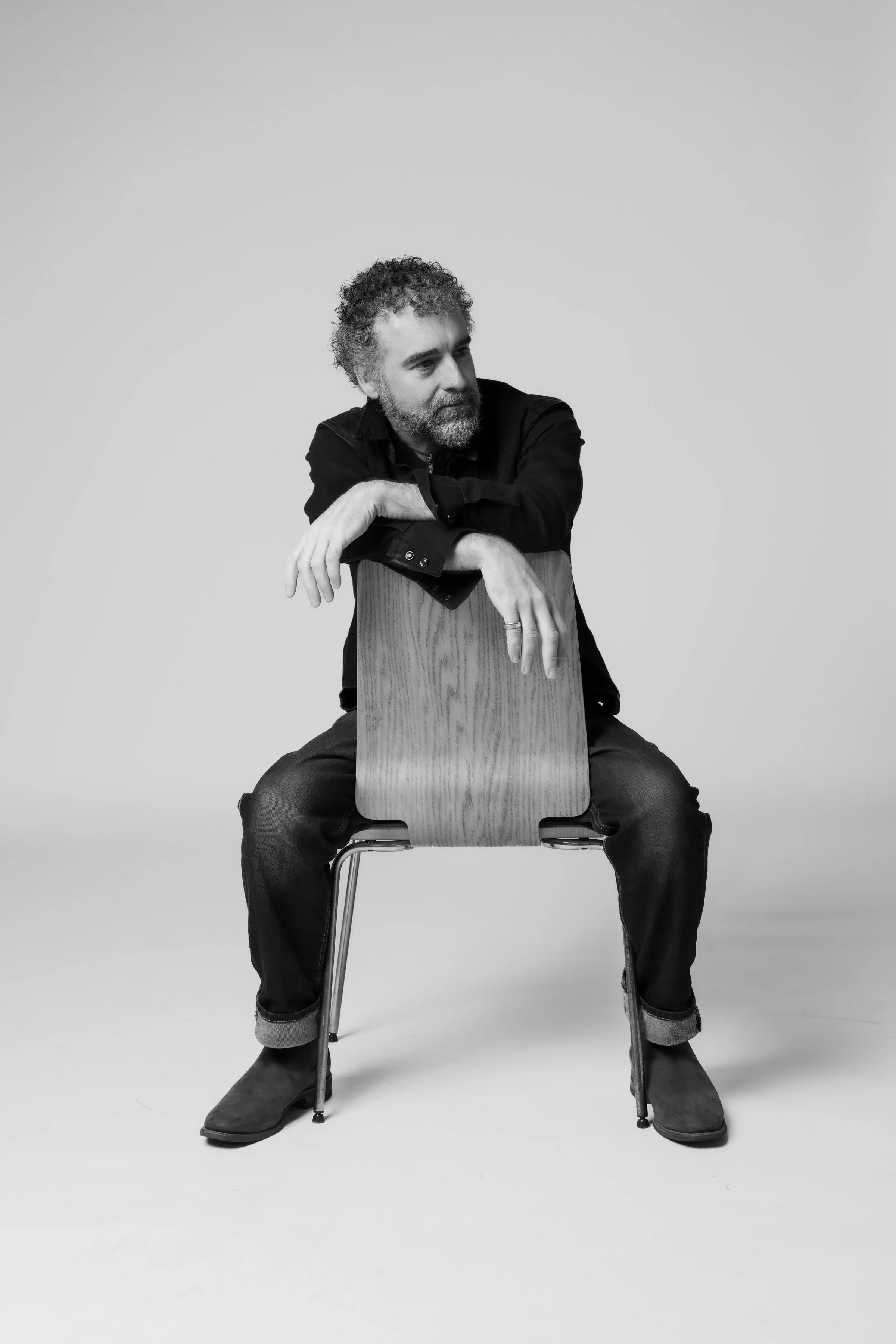
Chris Hopkins - Photojournalist, Walkley Press Photographer of the Year, Educator
Q: When you were at school, was photography ever the plan?
A: No. As a kid at school, I thought I was going to play cricket for Australia. I was a reasonably good cricketer and my whole life was sport—cricket in particular.
I did have a camera, though. My grandparents lived in New Guinea and Mum and Dad bought me a camera to take over there. Mum had an SLR too, which she’d planned to get into but never did. I remember being fascinated by it—swapping lenses, this beautiful bit of machinery making something magical. But it was just an interest. I never imagined it as a career.
Q: So what led you into photojournalism?
A: Necessity, honestly.
I travelled for six years—backpacking around the world. Cricket took me overseas initially, then I fell in love with travel and everything that comes with it: the freedom, the chaos, the drinking, the drugs, the high life. During that period I developed a real love for photography, but I still didn’t see it as a job.
I’d always worked stopgap jobs—did an accounting and marketing degree, then every time I came home I’d work for a mate in construction. After travelling, I kept doing that for about five years. Then I had kids and suddenly needed a proper job—and construction wasn’t it.
My partner at the time said, “You like photography, why don’t you give that a go?” So I did. I put myself through night school. By the time I finished I had two kids under three and had to get work. It was pure necessity.
At first I wanted to be a wildlife photographer, but my teachers said, “That’s pretty niche, and with kids it’ll take forever to make money.” They told me my photos told stories and suggested photojournalism. Once I discovered Salgado and Nachtwey, that was it. I was hooked.
Q: And that’s what you’ve been doing ever since?
A: Yeah, pretty much. I was lucky—my tutor in my final year was working for The Age and put my name forward to Fairfax. They brought me in as a casual straight away for the local papers, which as a student was huge.
But it still took a good year to fully transition. In that time I didn’t say no to anything—headshots, events, corporate gigs, whatever paid. Anything that kept me behind a camera and not standing in wet concrete.
I always knew the goal: first step, local paper; next step, a major masthead like The Age. That came with perseverance, hard work—and doing good work, obviously.
Q: Do you still love photojournalism?
A: I do, but it’s evolved.
Now I’m doing more international work and seeing it actually have an impact. The project in Uganda has contributed to changes in the law over there—things aren’t good for people with disabilities, but they’re shifting. You can’t not love the work when it’s doing some good.
From the start, I’ve had this feeling that I didn’t want to die without leaving some mark beyond family. Your kids are your legacy, sure, but I wanted something outside of that. Photojournalism became the vehicle for that—a way to tell stories that might actually change something. It sounds grandiose, but with hard work, I think you can have that impact.
Q: What was it like winning your first Walkley Award?
A: It came fairly quickly, I guess. I finished college in 2010, was working in mainstream media by 2014, and won the first Walkley in 2018. So within eight years of graduating.
I was wrapped. It felt like reward for hard work and for good work. That particular year I think they got it right. Since then I’ve won a few others, and I don’t want to bag the Walkleys too much, but they do get it wrong a fair bit.
That first one was special though. It reassured me that I was on the right track—especially because the work that won was dark, tonally and emotionally. That’s my aesthetic, but that kind of work doesn’t often win things. I don’t think it would win today. Visual literacy has shifted a lot in the last five to seven years.
Q: How so?
A: We’re bombarded with images now. There’s so much out there that if a picture has a rainbow in it, it gets 100,000 likes on Instagram. If it tells a story but sits in deep shadow, people don’t know what they’re looking at.
The generation coming through are the ones becoming gatekeepers—picture editors, art directors—and if they don’t really understand what makes a good picture, we’ve got a problem. You end up with an aesthetic that’s merely pleasing, rather than powerful.
That’s an issue for journalism. It means images that truly tell a story might be overlooked in favour of the pretty, easy stuff.
Q: What’s next for you? Staying in the same lane, or changing direction?
A: I’m at a bit of a crossroads.
For the last decade I’ve had two major long-term projects: one in Uganda, and one in public housing here. I’m heading to the housing estate after this, actually. I don’t know whether those projects have come full circle or not—I’m trying to figure out what to do next with both.
The work in Uganda has already helped change laws, but life is still incredibly tough for people with disabilities. I need new angles, new hooks, to get the work in front of people again. Public housing is similar: I don’t know if we’ll stop them knocking the buildings down, but we’re going to try, through storytelling.
So what’s next? I honestly don’t know. And that’s terrifying and exciting at the same time. It forces me to think hard about what I’m doing and where to push myself next.
Q: When you’re doing strict news work—protests, rallies, riots—how easy is it to remain neutral?
A: For me, it’s easy.
I know why I’m there: to do a job. I’ve got my own politics, like everyone does, but that doesn’t come into it when I’m working. There’s a switch that flips. My only focus is making the best picture I can that tells the story of the day.
At a protest, I don’t feel like I’m “on” either side. I’m just there to observe and record. It’s hard to explain because it feels inherent—it’s just how my brain works when I’m holding a camera.
With Uganda or the public housing work it’s different—there is an end goal and a clear point of view. I know what I’m trying to influence there. But in straight news, neutrality is part of the discipline.
I’m also conscious that I work for a publication, and they’ll put whatever spin they want on the work depending on who owns the masthead. Neutral pictures support either side and don’t feed their narrative in a way that feels dishonest.
On the rare occasion I’ve felt an image was being misused, I’ve called the picture editor and said, “Take my name off it.” And they have. But when I’m shooting, I don’t shoot to push an agenda.
Q: Looking back at your life and career, any regrets? Any big obstacles you struggled to overcome?
A: I don’t have regrets, no.
If anything, I’d regret the things I haven’t done more than the things I have—but I can’t name them, because I didn’t do them.
In terms of obstacles, the industry itself is the big one. It’s brutally tough. There are hardly any of us left, which in a way is proof that I must be doing something right to still be here.
I whinge about the industry like anyone else, but the truth is, it’s been good to me. Touch wood, it stays that way. Any obstacle that’s come up, I’ve managed to get around. That sounds big-headed, but it’s true—and it’s why I’m still working when so many photographers have left the field.
Q: How do you see the state of photojournalism now—in Australia and globally?
A: In Australia, it’s not in a great place.
It’s a smaller industry here, so the decline feels sharper. We don’t actually have that much happening news-wise compared to other parts of the world, and yet there are still plenty of journalists. A lot of what we do now is “crack in the concrete” local-reporting work that used to belong to local newspapers.
When I started, the local papers kept councils accountable—things like dangerous footpaths were their beat. Now those papers are gone, so the big mastheads are doing local-paper work, and they’ve backed off from the international coverage they once did.
That’s a backward step. Twenty years ago, big mastheads were sending people overseas regularly. Now, if you want to do serious international work, you often have to pitch it overseas. My Uganda work, for instance—I’d never get that published in an Australian masthead. It runs overseas instead.
Globally it’s struggling, but less intensely than here. In Australia, we’re quite insular. We travel a lot, but as a society we don’t really care deeply about what’s happening elsewhere. That lack of curiosity filters into media demand. It’s a societal problem, not just an industry one.
Q: You’ve mentioned travel a few times. How important has that been for you?
A: Huge. I worry that for many Australians, “travel” means Bali, Phuket, and Contiki tours. I’ve never been to Bali and probably never will, by choice.
Travel—proper travel—broadens you. I used to joke with my sister about people “going off to find themselves,” but it’s true. Growing up in a small country town, travelling showed me who I was and how other people live.
There was definitely a point where my travel became a way of avoiding responsibility, but even then, it was better than avoiding responsibility through drugs at home.
It informed my photography deeply. It made me curious about people, cultures, and why we think the way we do. Everything I’ve done—cricket, travel, construction, study—has fed into the photographer and journalist I am now.
I’m not sure I believe in fate, but when I look back, everything seems to have rolled into everything else in a way that makes sense. And I’m not done yet. I’m talking like it’s the end, but there’s still a long way to go.