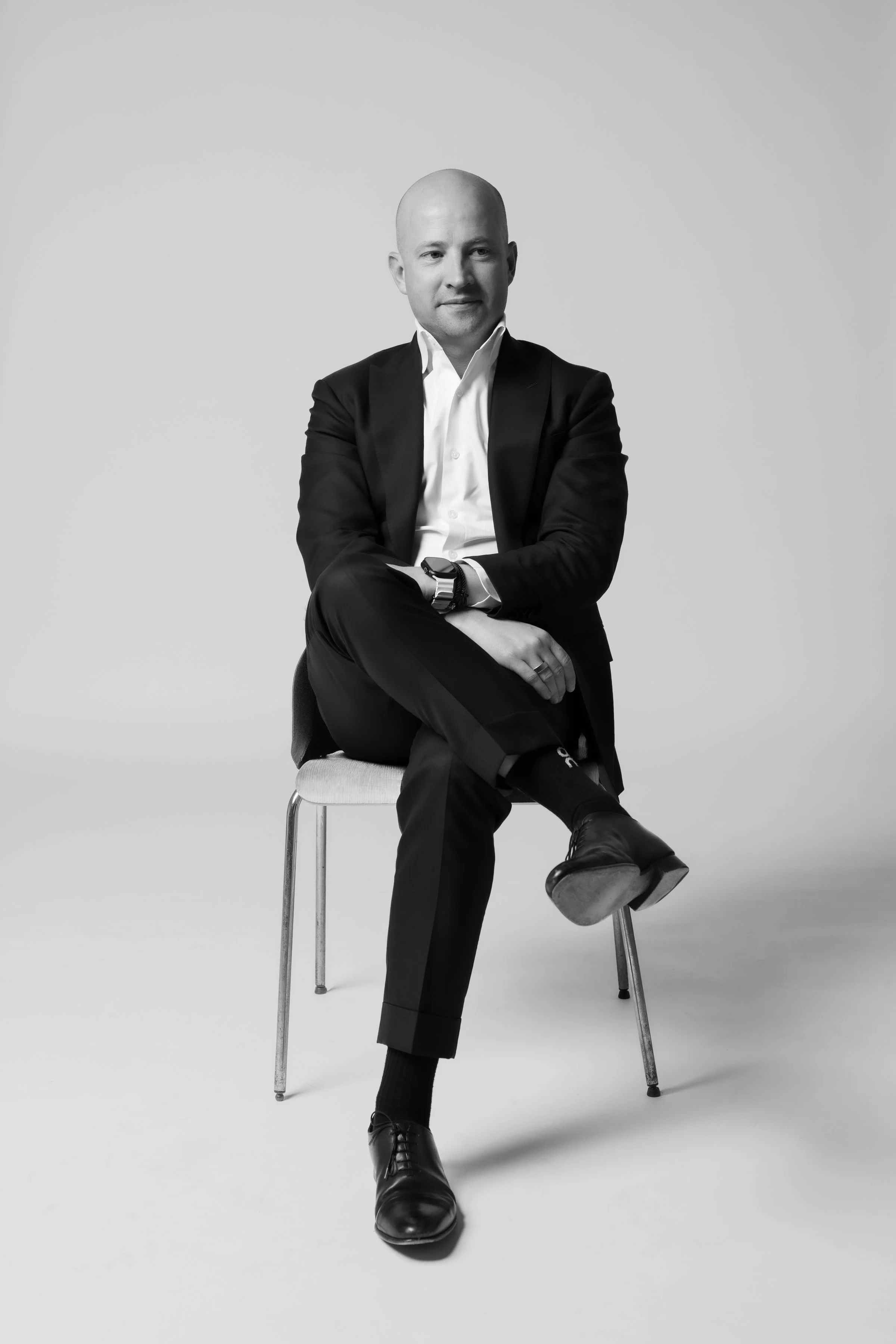
Josh Phegan - Real Estate Trainer, Coach and Motivational Speaker
Q: When you were at school, what did you imagine your career would be?
A: In primary school the other kids decided I was going to be a politician. I could present well, I loved debating, and in Year 6 we ran a mock election where I played Dr John Hewson. I actually won—unlike the real election later that year. So “Polly” was always going to be part of the conversation.
The funny thing is, if you’d asked my mum when I was six, she would’ve said I was very shy. I’d been raised to be “seen and not heard,” and I believed that. Speech and drama changed everything. I had a brilliant teacher, Jan Skinner, who got me performing Shakespeare monologues and duologues, playing multiple characters, really learning how to use my voice and presence. That cracked something open that’s still with me now.
Q: How do you describe what you do now? Is it coaching? Presenting? Something else?
A: People call it coaching, training, presenting—but in reality, for a lot of people it’s almost therapy. It’s giving them permission to feel what they’re feeling, understanding where they are in a particular life or career stage, and helping them find a way through.
My dad jokes that I’m a “hope dealer, not a dope dealer.” I like that. My job is to give people a bit of light at the end of the tunnel—help them get back into rhythm and routine.
Like today: we tried to get a guy to the event who didn’t show. His mother died last week. I sent him a voice note last night just to encourage him—not for money, just to make life a tiny bit easier and help him step forward again. That’s the best part of the work.
Q: Your family has deep roots in real estate. Can you talk about that?
A: My grandfather started Phegan Real Estate in 1972 in Albury–Wodonga. Dad was one of nine siblings, and seven of them ended up in real estate at some point. By the early ’80s, all the Phegans were basically in competition with each other.
So I grew up with “Phegan” being synonymous with real estate. I watched tenants come in to pay rent, listened to dot-matrix printers spit out receipts, and as a six-year-old I was licking 300 envelopes every month for landlords. That’s how I knew we had 300 landlords—300 envelopes.
Dad would collect overdue rent on Sundays before church. Then he’d beg forgiveness in true Catholic style. It was funny, but it also taught me a lot about people, service, and responsibility.
Q: Did you always think you’d go into real estate yourself?
A: I thought I’d be a valuer—that’s what Dad wanted. RMIT politely told me I had Buckley’s chance of getting into valuation. Coming to Melbourne from the country felt huge, and I didn’t expect a great HSC mark, so I decided to create my own opportunity.
I called every business in town with more than 50 employees. There were about four: Uncle Ben’s (Masterfoods), Westrac (farm and mining machinery), a car dealer, Norske Newsprint, and the local paper, the Border Mail.
The Border Mail offered me a cadetship where they’d pay for uni and give me a full-time job. It was incredible. I worked a day in every part of the paper—editorial, photography, printing, accounting—calling my own uncles about unpaid bills, taking death classifieds from bikies sending threats. It was a wild education in media and people.
At the end, they offered me a full-time role, but the pay difference from casual worked out to about $35.25 a week. I said, “I’m out of here.”
Q: How did that lead you back toward real estate and then into coaching?
A: After leaving the paper, a mate convinced me to come up to Brisbane. He was in a circus called Rock and Roll Circus and thought I was the right weight to be a flyer. That didn’t exactly pan out. After a few days, Dad suggested I come home—but he put a ticket in my hand for the Australasian Real Estate Conference in Sydney on the way back.
I went, loved it, came home, and Dad asked me to write a training manual for the business. We became the first quality-endorsed real estate practice in Australia—ISO “five ticks” level. That process taught me a huge amount about writing, systems, and process.
We believed that putting the quality logo on our signboard would magically bring more listings. It didn’t. What actually brings listings is the quality of your processes and service. It took us a while to make that link.
I worked with Dad for about five years—systems, then selling—until he asked me if I wanted to run the business for life. I didn’t. I had broader aspirations than Albury. He’d planned to retire at 55, which he did. We sold to Colliers International, got out, and five years later at 60 he went back in.
I went travelling. My dream was a job where I never slept in the same bed more than two nights in a row. Mum was horrified. Eventually I drifted into training. Phil Harris (Harris Real Estate, Adelaide) and then Amber Werchon both called asking me to work with their teams. Our first major work was in Bright in regional Victoria. And that’s how the coaching business really started—no grand vision, just a desire to help people and figure out how to speed up their success.
Q: How did you develop yourself as a coach and presenter?
A: A lot of watching and learning. Tom Peters is one of my favourites—one of the great presenters globally.
Growing up, Dad played Zig Ziglar, Brian Tracy, Jim Rohn and all the old greats in the car. I didn’t even realise you could listen to anything else on the way to school. That soaked into my DNA.
Beyond that, it was trial, error, paying attention to what worked. I’ve had to develop different skills for different stages of life and business. I’ve been called into situations ranging from murders and ugly business break-ups to beautiful things like mergers, acquisitions, and building brands from scratch—like O’Brien from day one.
One old-school line I love: “Tell me the story and I’ll work out the numbers.” These days I’d flip that—give me the numbers and I’ll find the story. Either way, I’ve always focused on understanding people, context, and then building the right narrative and strategy around that.
Q: Your presentation style is very personal—you share a lot of yourself and your family stories. Is that deliberate?
A: Yeah, absolutely. Dan and Chip Heath wrote in Made to Stick that people remember ideas through stories. That stuck with me. Story is how content lands and stays.
So I use a lot of storytelling—often with Dad as a character. He hates some of the stories: “I never said that!” And I say, “Yeah, but it’s a great seminar story, so now you’re a character.” He reckons he’s owed royalties.
Sharing myself is part of building trust. People don’t want a robot at the front of the room. They want someone human, fallible, who’s been through things and is willing to talk about it.
Q: Where do you see your career going from here?
A: I’m very aligned with that Steve Jobs idea: if you wake up too many mornings in a row and don’t like what you’re doing, stop. For the past 18 years, I haven’t had that feeling. I’ve technically “worked” a lot, but it doesn’t feel like work in the traditional sense.
If I could rewind, I’d love to have learned earlier to be paid on results, not time. My business is still mostly time-based, and I know the IP could be structured differently. That said, I love what I do and I’ve got so much great work ahead that I don’t see myself doing anything else.
My ideal exit is to die on stage in the middle of my best performance. I hope you’re not in that audience—you’d have to witness it. But that’s the dream: keep doing it until something else truly calls, and so far nothing has.
Q: Is international work a big part of your future?
A: Definitely. Dubai has been amazing. You walk into an organisation with 550 staff from 58 different cultures—that’s a very rich training environment. The challenges are harder, the problems more complex, and that’s what I love.
When one office is onboarding 30–40 people a month from all over the world, you’re forced to sharpen your coaching, your systems, your thinking. It keeps you learning. Working across Australia, New Zealand, London, Dubai—it stops things from becoming stale. The markets are different, the people are different, the issues are different. That keeps me engaged.
Q: Do you see yourself staying in real estate, or branching into other industries?
A: I’ll stay in real estate. We’ve done work in other sectors—car sales, even elevators, bizarrely—but real estate is in my blood and I can work in it almost on muscle memory. That frees me to push ideas further, because the base criteria is already in my bones.
There are universal principles that apply anywhere, and one day they’ll probably belong in a book rather than in a pitch for more speaking gigs. But my lane will still be real estate.
Q: Looking back, any big regrets or major challenges you’d do differently?
A: Early on, I had a competitor who was very aggressive—threatening legal action if I even used the words “real estate” in my business. I wish I’d had stronger mentors then who would’ve told me to tell him to take a hike.
I also wish I’d been more intentional with business planning in the first few years. If I had “me now” guiding “me then,” the first three years would’ve been phenomenal.
That said, the struggles forced growth. We were doing podcasts a decade ago, before they were fashionable. The newspaper years taught me the power of production—audio, video, live events. At heart, I’m just a publisher, using different mediums to give people hope and practical foundations for a strong career.
The other big thing people may not realise: choosing this career meant choosing not to have a family. If I were a dad, I’d want to be a very active dad. My travel and workload don’t lend themselves to that. I don’t regret it, but it is a very clear choice.
I sometimes look at people who have kids but don’t lean into the role and think, “Why did you do it then?” If I ever became a dad, I’d change my life quickly. But as it stands, I won’t die wishing I’d done that. These are conscious decisions I’ve made along the way.
Q: Anything you’d like to add?
A: Just that it’s all stories in the end. Careers, businesses, lives—they’re all stories we’re writing every day. I’m just lucky that my job is helping people write better ones.